Antique vs. Vintage: What's the Difference?
What's the difference between antique, vintage, and retro? And when did the things we grew up with become collectibles? (Yes, even the year 2000 is considered vintage now!) Explore how everyday objects become treasures, why collecting trends change, and how yesterday's household items find new life in today's antique shops.
And when did the stuff we grew up with become collectible?
If you've spent much time browsing antique stores, estate sales, or flea markets, you've probably noticed that the words antique, vintage, and retro get tossed around quite a bit. Sometimes they're used to describe the same thing, but they actually have different meanings.
We get to see a little bit of everything at Middleton's, from furniture and household items that are well over a century old to things many of us remember having in our homes growing up. And while the terminology might not seem all that important, knowing the difference can make collecting and shopping for older pieces a little more interesting.
So, what exactly makes something an antique rather than vintage?
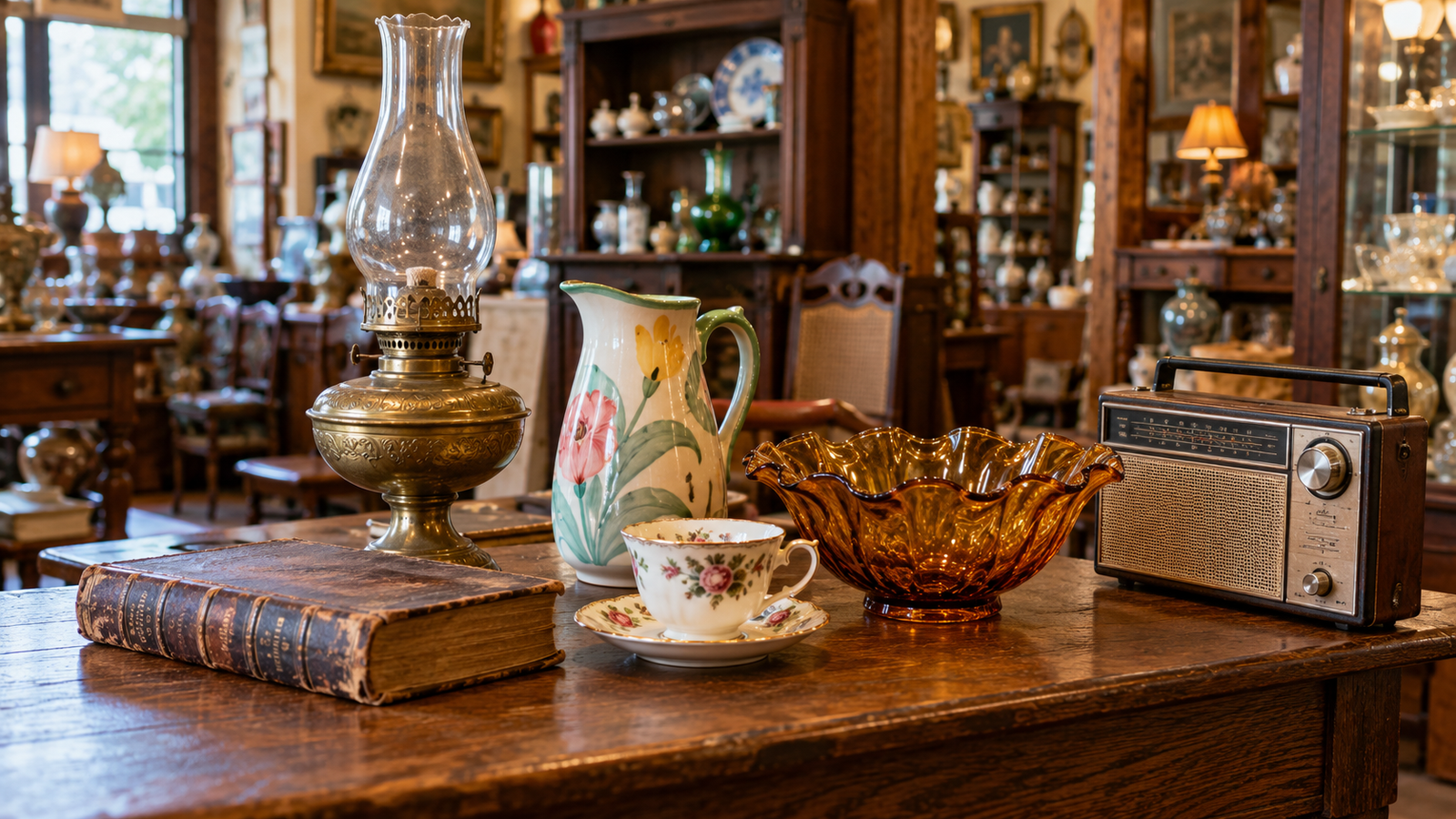
From century-old antiques to the vintage items we remember growing up with, every generation leaves behind its own treasures.
What Makes Something an Antique?
The generally accepted definition of an antique is something that's at least 100 years old.
That means that in 2026, an item made in 1926 is reaching antique status. Think about that for a moment. Things made during the Roaring Twenties, an era we often associate with relatively modern inventions and changing lifestyles, are now a century old.
Antiques can be just about anything. Furniture, dishes, lamps, books, tools, jewelry, and even everyday household items that most people wouldn't have given a second thought to when they were new.
One of the things I find most interesting about antiques is imagining the lives they've been part of.
Take an old dining table, for example. How many family dinners were served around it? How many holidays, conversations, or important family decisions took place there? Who originally purchased it, and what did their home look like?
We'll probably never know the answers, but that's part of what makes these pieces interesting to me.
And sometimes the most ordinary objects tell us the most about how people lived.
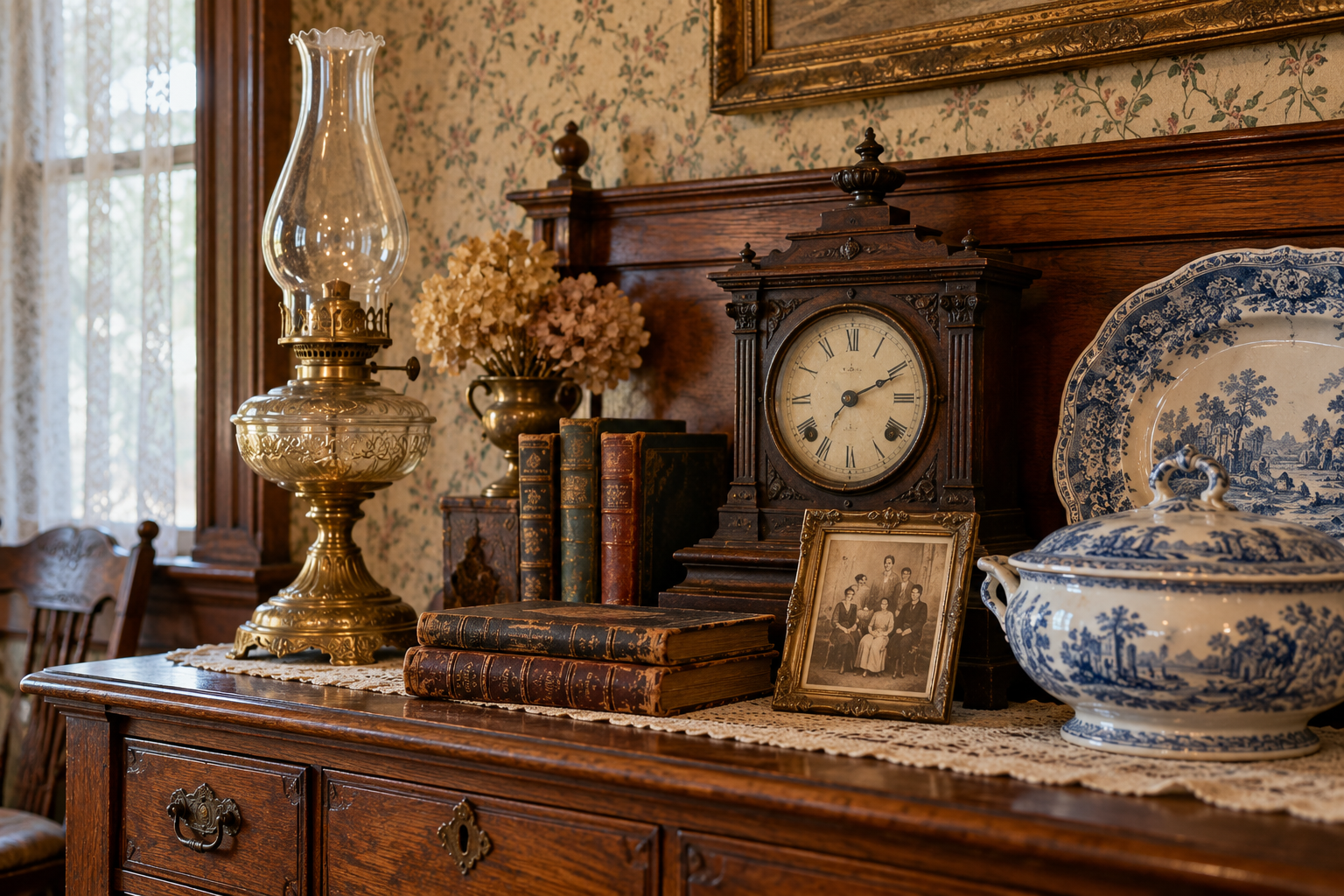
An antique is generally considered to be at least 100 years old, but the stories behind these objects are often just as interesting as their age.
So, What's Considered Vintage?
Vintage is a little less clearly defined.
Generally, people use the term for items that are at least 20 years old but haven't quite reached the 100-year mark. There's no hard-and-fast rule, though, and you'll find different definitions depending on what someone collects.
And yes, that means things made in the year 2000 are now considered vintage. I'll give you a moment to let that sink in.
Depending on when you grew up, you might be surprised to realize that things you used every day in high school are now considered vintage. Maybe it's the cassette tapes you recorded your favorite songs on, the VHS movies you watched over and over, or that first cell phone you thought was the greatest thing ever. It's funny how seeing something you haven't thought about in years can instantly take you back to a particular time, place, or even the people you shared those memories with. And now those same things are sitting on the shelves of antique shops with price tags on them. I'm not entirely sure I'm ready for that!
Think Pyrex mixing bowls, mid-century furniture, colorful glassware, costume jewelry, old radios, and those dishes you remember seeing in your grandmother's kitchen.
That's one of the things I enjoy about vintage pieces. They often bring back memories.
Someone will pick up a serving dish and tell us their mother had the exact same one. Or they'll recognize a piece of furniture that sat in their grandparents' living room for years.
Sometimes it's something they haven't thought about in decades.
Those conversations are one of my favorite parts of being around antiques and vintage merchandise. It's interesting how something as simple as an old coffee cup can bring back an entire memory.
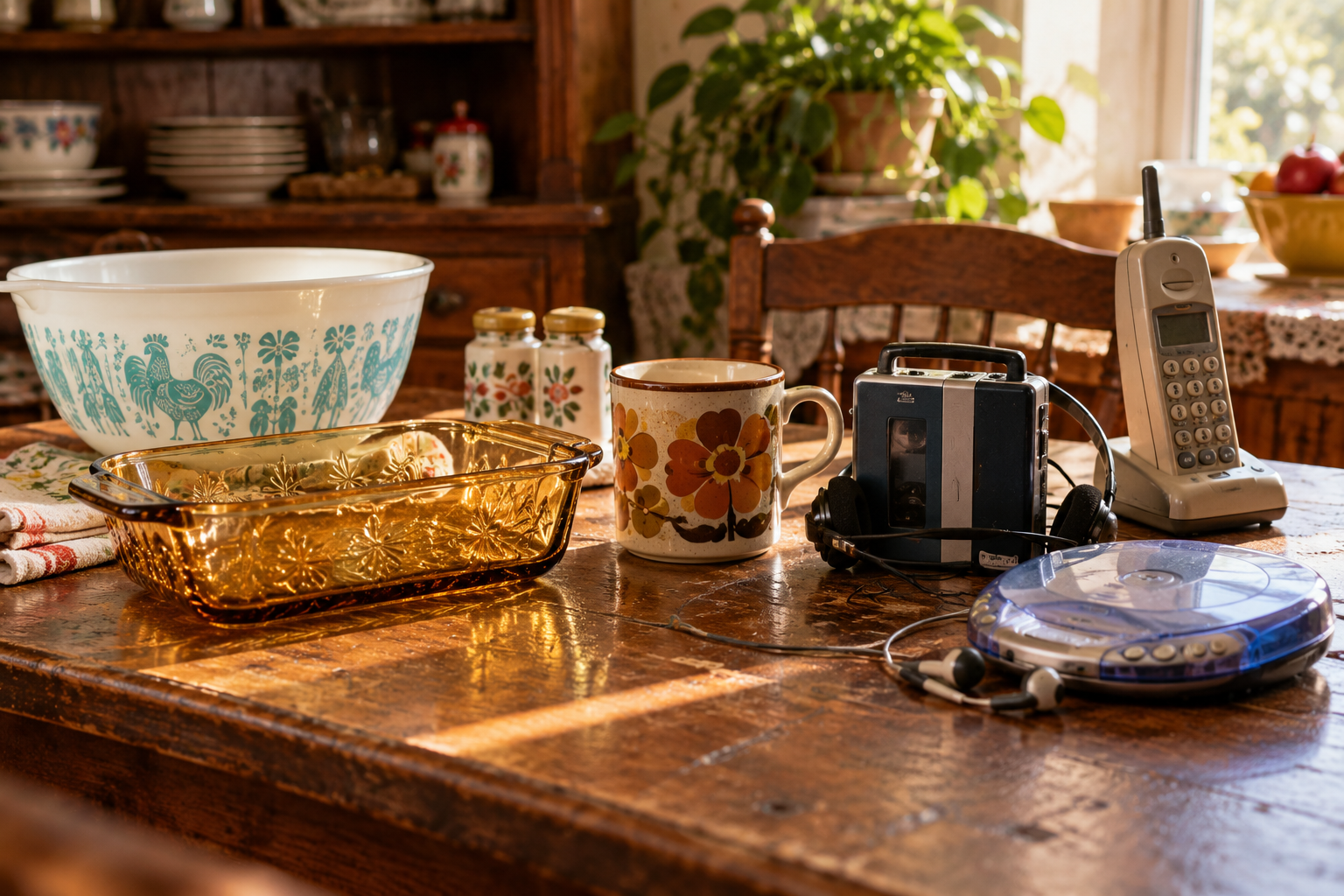
Yes, even items from the year 2000 are now considered vintage. Some of us are still coming to terms with that.
And Then There's Retro
Retro is where things get a little confusing.
Unlike antique or vintage, retro doesn't necessarily mean something is old. It usually means the item was designed to look like something from an earlier time.
You might see a brand-new refrigerator with rounded corners and pastel colors that looks like it belongs in a 1950s kitchen. That's retro.
The same goes for newly manufactured furniture, lighting, or décor inspired by earlier styles.
There's certainly nothing wrong with retro pieces. In fact, some are quite attractive. But there's a difference between something that was actually made in the 1950s and something manufactured last year to look like it was.
And that's an important distinction, especially when you're buying something because of its age or history.
The Changing Face of Antique and Thrift Stores
Here's something I've always found interesting: the things you find in antique stores and thrift shops change over time, and not just because collecting trends come and go.
Think about what you might have found in an antique store 30 or 40 years ago. Victorian furniture, Depression glass, early American collectibles, and other items from the late 1800s and early 1900s were common sights.
Those things certainly haven't disappeared, but today we're also seeing more merchandise from the 1950s, 1960s, 1970s, and even the 1980s and 1990s.
There's a reason for that.
As generations grow older, downsize, or pass away, the things they've accumulated over a lifetime begin finding their way into estate sales, auctions, thrift stores, and antique shops.
The contents of yesterday's family homes gradually become the inventory of today's secondhand stores.
And what people are looking for changes, too.
There was a time when large, ornate Victorian furniture was highly desirable. Today, many shoppers are drawn to the simpler lines of mid-century modern furniture, colorful vintage kitchenware, and decorative pieces that fit more easily into contemporary homes.
That's not to say Victorian furniture has lost its appeal. There are still plenty of people who appreciate it, myself included. But tastes change, and what one generation considers old-fashioned, another might rediscover and fall in love with.
The same thing happens with smaller collectibles.
Items that were once inexpensive and overlooked can suddenly become popular. Meanwhile, things that collectors paid substantial amounts for years ago may no longer command those prices.
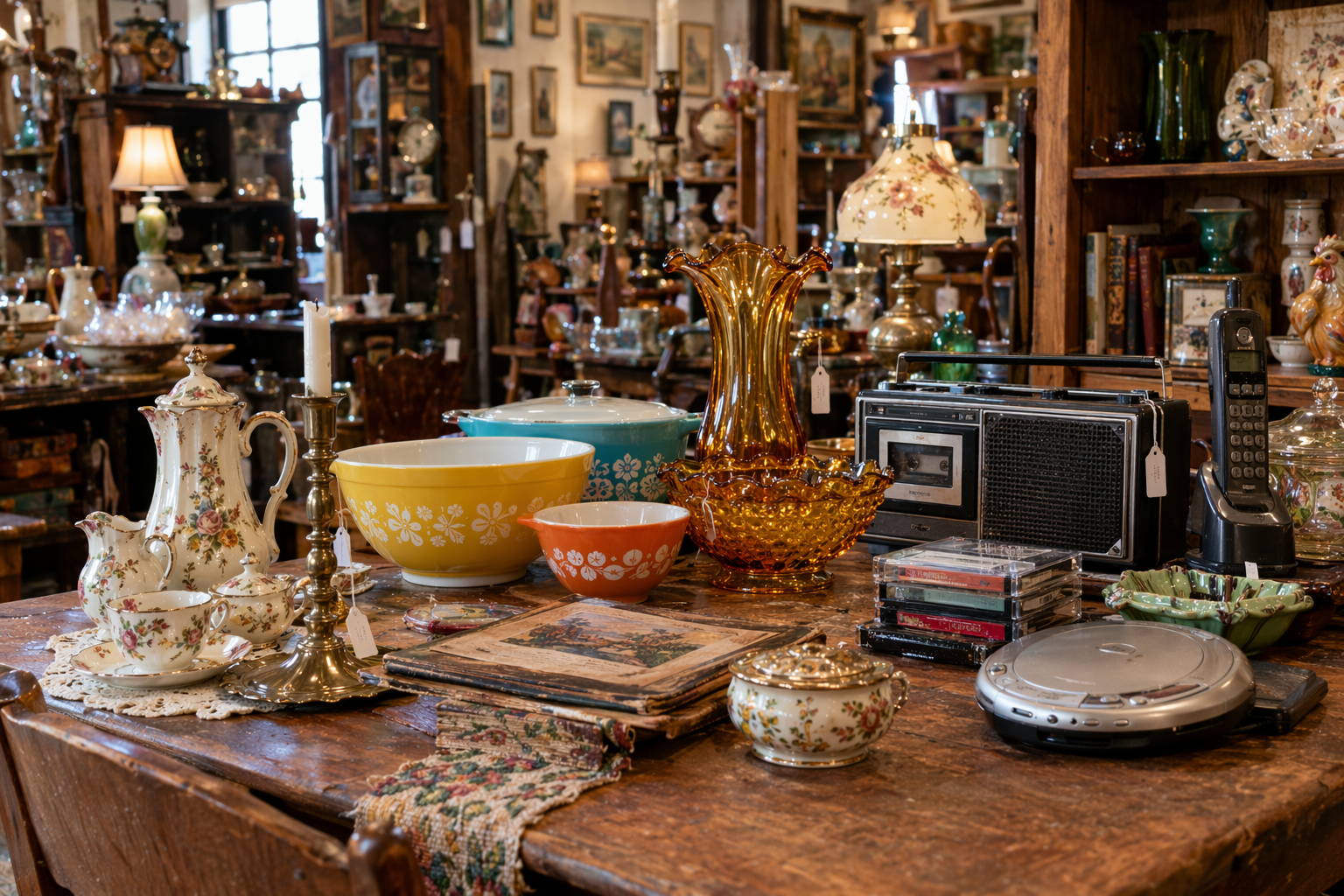
As generations change, so do the things we find in antique stores, thrift shops, and estate sales.
It's also interesting to consider how thrift stores fit into all of this.
Twenty or thirty years ago, you might have walked into a thrift store and found plenty of household items from the 1940s and 1950s. Today, you're just as likely to encounter things from the 1980s, 1990s, and early 2000s.
And eventually, those things will begin showing up in antique shops, too.
I sometimes wonder what antique stores will look like another 30 or 40 years from now.
Will people be collecting early smartphones? DVD players? Those enormous entertainment centers everyone seemed to have in the 1990s?
Maybe. Although I suspect finding room for one of those entertainment centers might still be a challenge!
The point is that antique stores are constantly evolving because the past keeps getting a little bigger.
And what we consider ordinary today may eventually become something future generations are excited to discover.
Does Being Older Make Something More Valuable?
Not always, and this is something that surprises people.
It's easy to assume that an object that's 150 years old must be worth more than something made 50 years ago. But age is only one part of determining value.
Condition, rarity, manufacturer, craftsmanship, and current demand all play a role.
Some things have survived in surprisingly large numbers, even after a century or more. Others were produced for only a short time, making them much harder to find today.
Collecting trends also change.
There are pieces that were highly sought after 30 years ago that don't bring nearly as much today. On the other hand, certain styles of vintage glassware, furniture, and decorative items have developed strong followings.
And then there's the difference between monetary value and personal value.
An old family photograph might not be worth much to a collector, but to the family it belongs to, it could be priceless.
I think that's worth remembering whenever we talk about what an antique is worth.
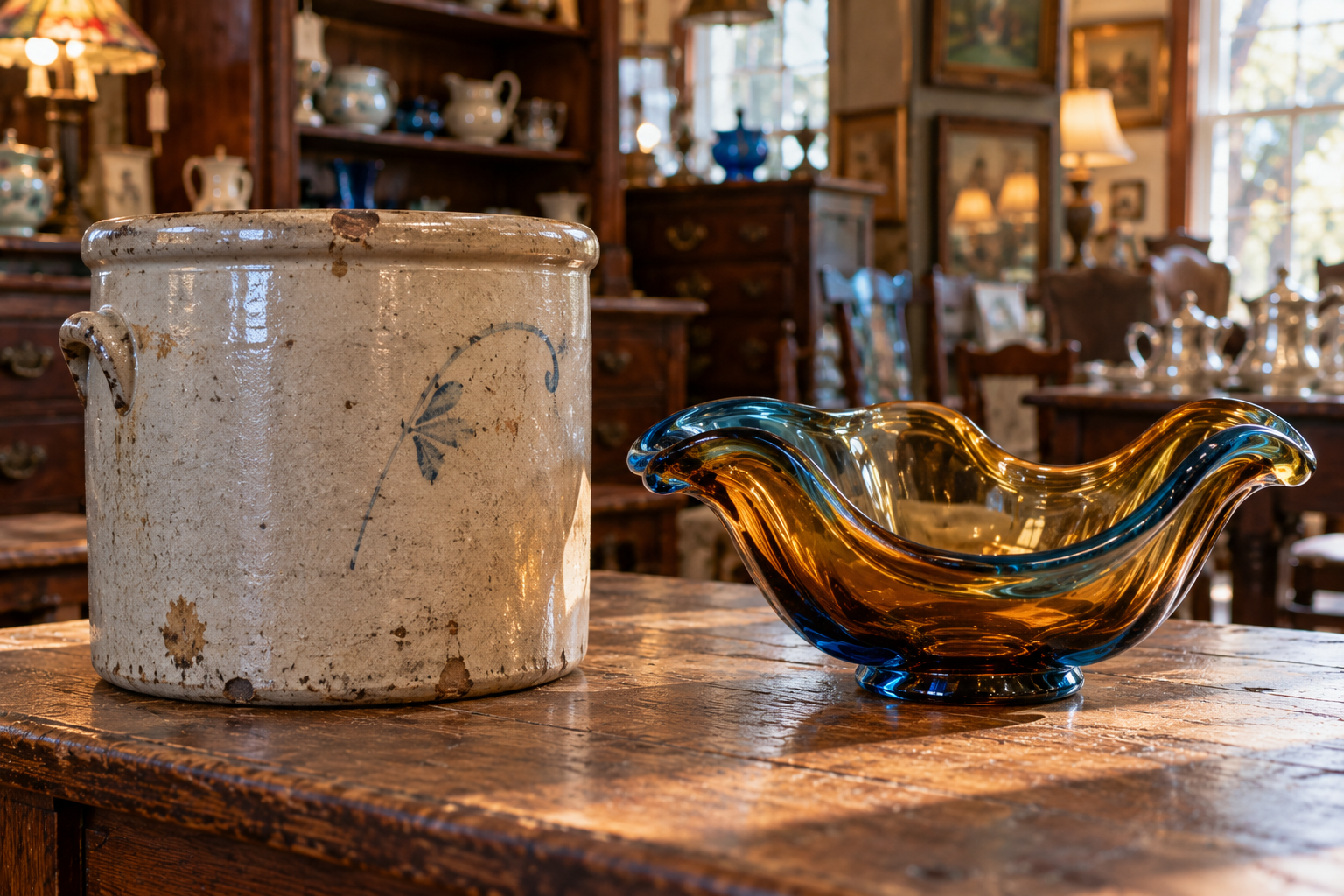
Age is only one factor in determining value. Condition, rarity, craftsmanship, and demand can matter just as much.
Today's Vintage Is Tomorrow's Antique
Here's something else to consider.
Every year, another group of objects reaches its 100th birthday.
In 2026, items made in 1926 are becoming antiques. In another 25 years, things made in 1951 will reach that same milestone.
That means the furniture, dishes, and household items many of us associate with our parents or grandparents are gradually becoming the antiques of tomorrow.
It's also a reminder that the things we use every day eventually become part of history.
Of course, that doesn't mean everything we save will become valuable. But it does make you wonder which ordinary objects from our own lives people might find interesting a hundred years from now.
Personally, I have a hard time imagining someone getting excited about finding an old DVD player at an antique store in 2075, but then again, I'm sure someone in 1926 would have been equally puzzled by our fascination with some of their everyday household items.
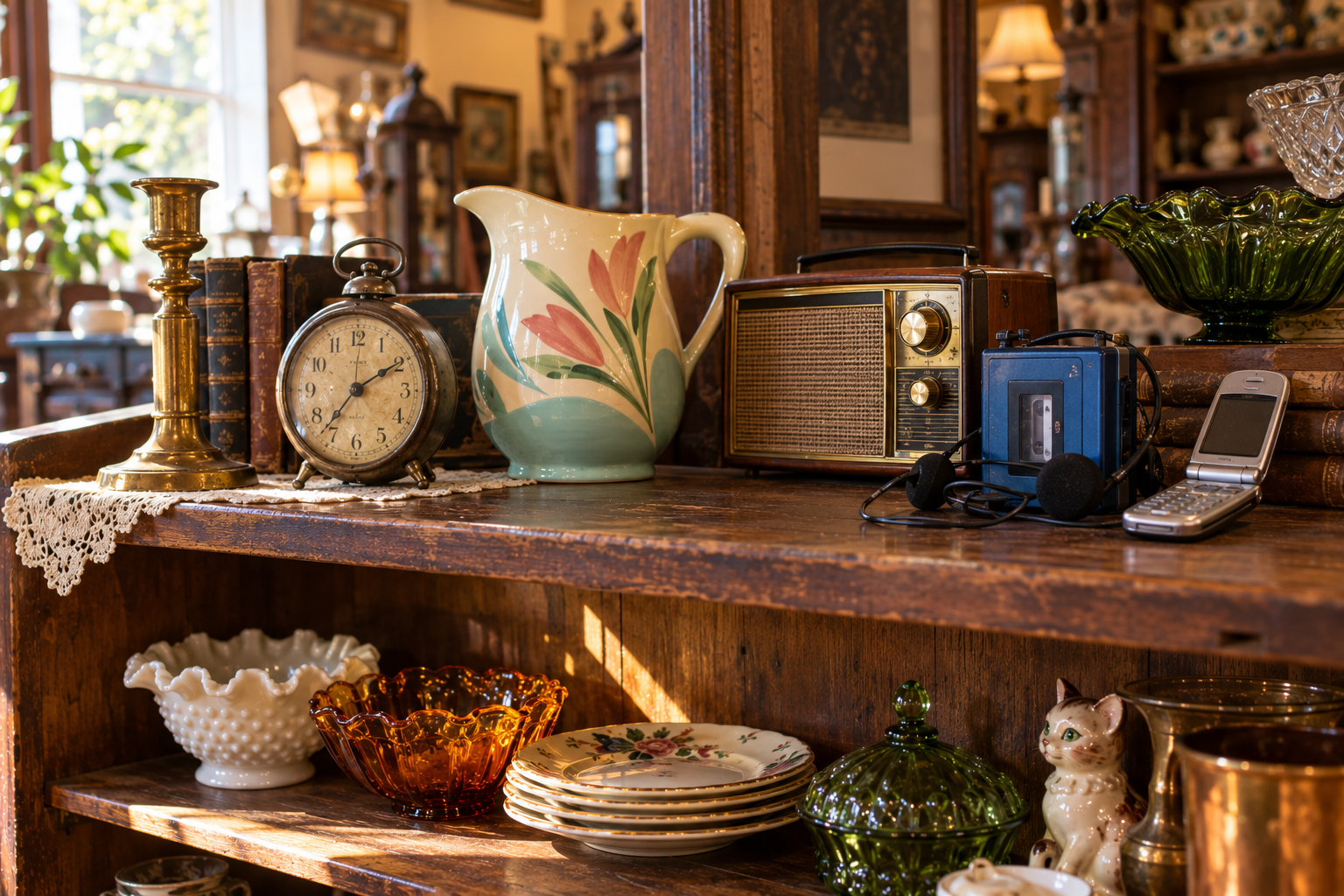
The everyday objects of one generation often become the collectibles of the next.
At Middleton's, We Appreciate All of It
One of the things I enjoy about Middleton's is the variety.
With more than 25 vendors, we have people who collect and sell all sorts of things. You'll find genuine antiques alongside vintage furniture, books, glassware, jewelry, collectibles, and plenty of items that don't fit neatly into any particular category.
Some pieces are historically significant. Others are simply interesting, unusual, or beautifully made.
And occasionally, something comes through the door that leaves us scratching our heads and doing a little research ourselves.
That's part of the fun.
Whether something is 25 years old or 125 years old, I think there's something special about finding an object that has survived long enough to have a story.
And if it happens to remind you of someone or somewhere from your own past, all the better.
If you're in Lincoln, stop by Middleton's Antiques, Books & Uniques at 1615 S. 17th Street and have a look around. Our inventory is always changing, and you never quite know what you'll find.
Maybe you'll discover something you've been searching for. Or maybe you'll come across something you haven't seen since you were a kid.
Either way, that's what makes browsing an antique store so much fun.